
Capabilities
Clinical trials embedded in the communities they serve.
A community-based delivery model built to reach patients the traditional site model leaves out, and to run their visits to the same standard wherever they happen. Every figure on this page is dated, and every claim links to the page that evidences it.
Why we are here
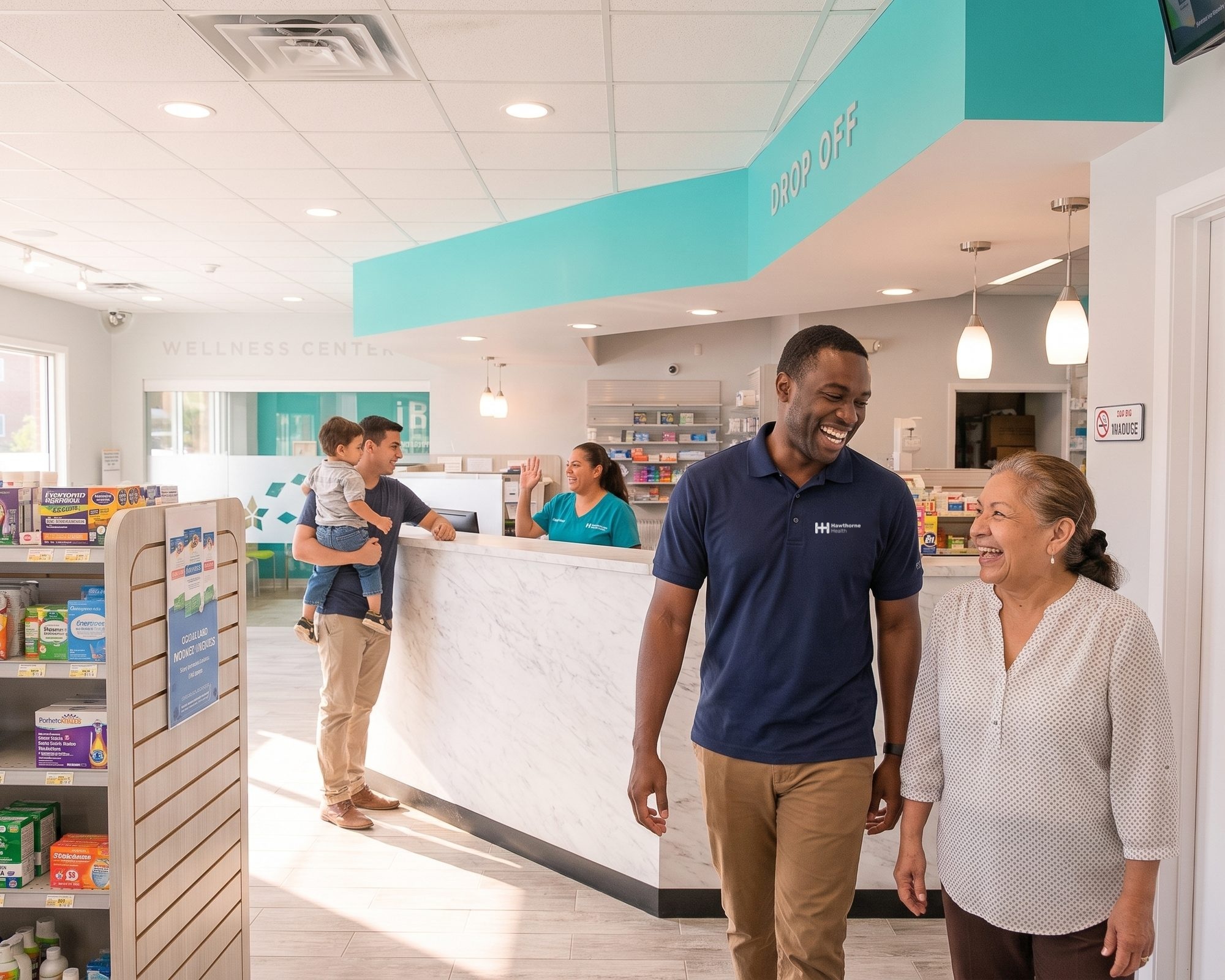
The traditional model concentrates research where most patients are not.
Three constraints keep trials out of reach. Each figure is attributed, because a capability claim that cannot be checked is worth less than one that can.
Geography
67% of U.S. counties host no clinical trial recruitment at all.
GoodRx Research, 2022
Trust
Patients trust a known provider 2.5 times more than a research site doctor.
CISCRP Perceptions & Insights Study, 2025
Convenience
70% of patients live more than two hours from a study site.
Sanofi, BioPharma Dive, 2019
Greater access improves enrollment performance, retention, protocol adherence, and timeline predictability.
Access changes everything
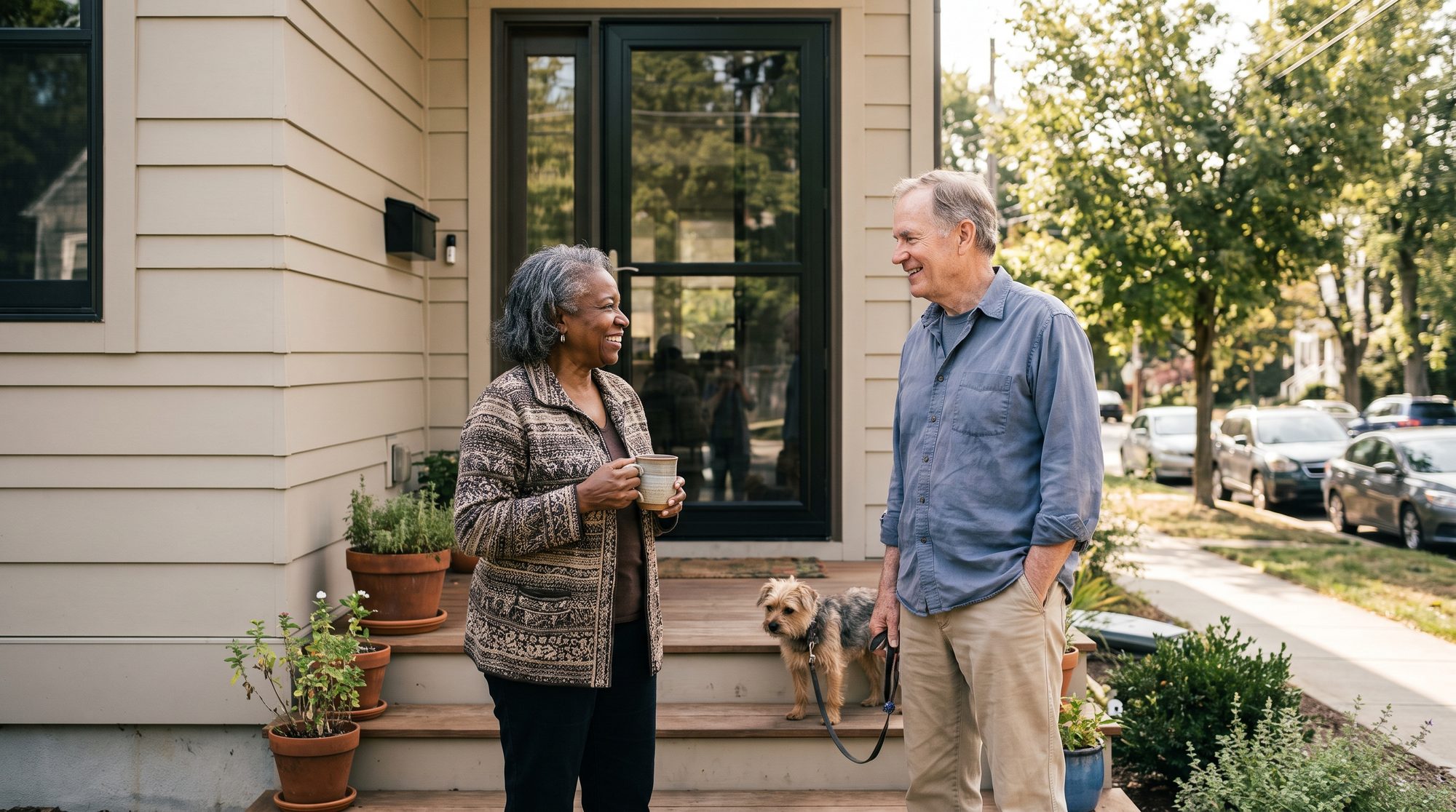
Research placed where patients already are, rather than where research has always been.
Who lives around our sites
We can tell you who is within reach of each site before feasibility begins.
Our 9 site communities hold 1,155,384 residents, and 19,323,080 counting the counties and nearby cities those sites draw from. The figures below are what a sponsor is really asking about when they ask about access.
of the population around our sites is 65 or older
Population-weighted across the site areas
are without health insurance
A group conventional sites rarely reach
speak a language other than English at home
Which shapes consent and materials, not just recruitment
The network
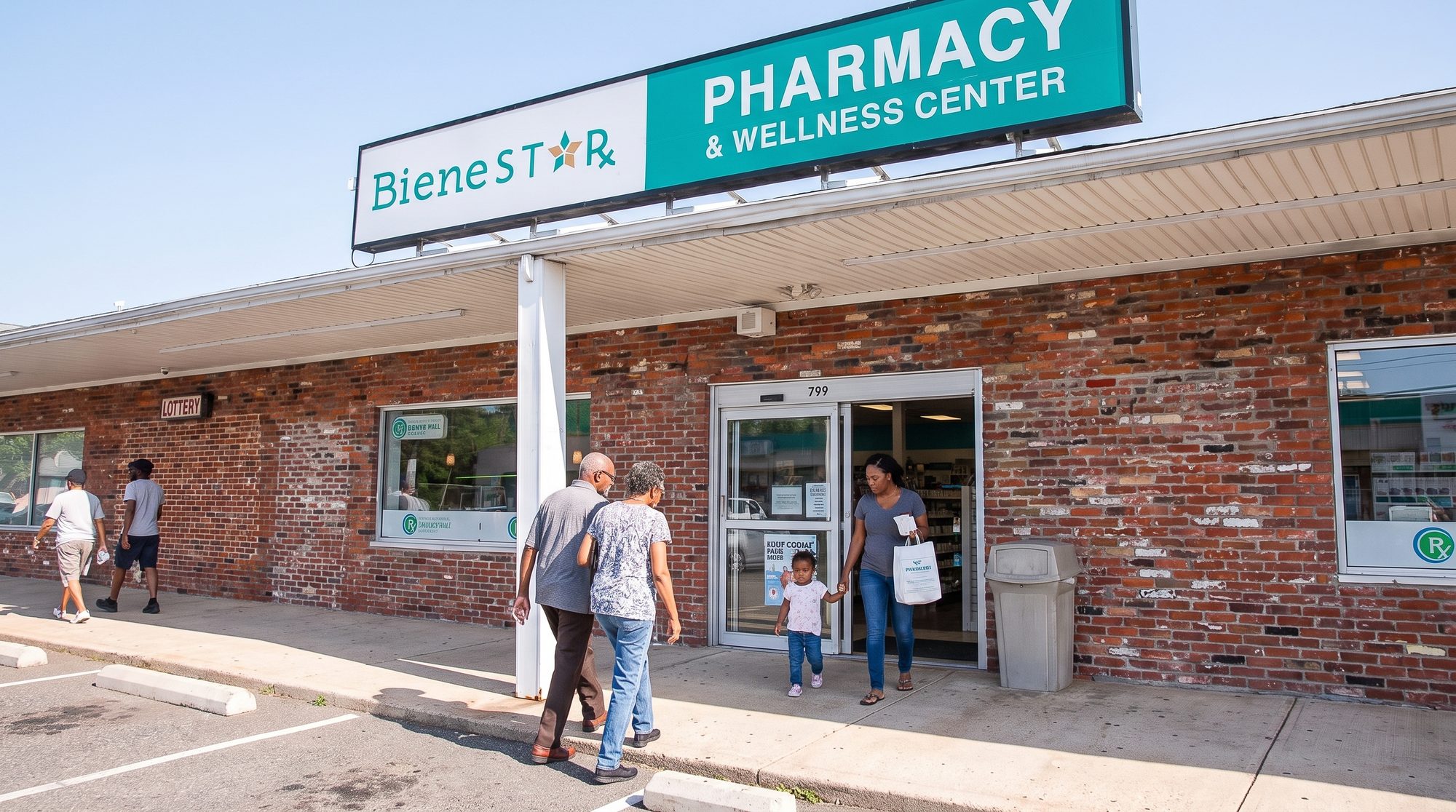
Standing research locations inside pharmacies patients already use.
The network
One operating model, delivered three ways.
Community sites, at-home visits, and hybrid studies that use both. One contract, one project manager, one quality system across all of them.
Network figures as of October 1, 2026.
Community sites
Research inside pharmacies patients already use.
Research locations in independent community pharmacies, each led by a local principal investigator and staffed by a full-time coordinator.
The site networkAt-home visits
Study visits in the home, in all 50 states.
GCP-trained nurses trained on the protocol, under Hawthorne oversight and documentation standards, delivering in-home visits since 2015.
At-home deliveryHybrid delivery
Sites and homes inside a single study.
One provider covering both settings, so a participant who cannot travel is not a screen failure and the sponsor still holds one contract.
Hybrid studies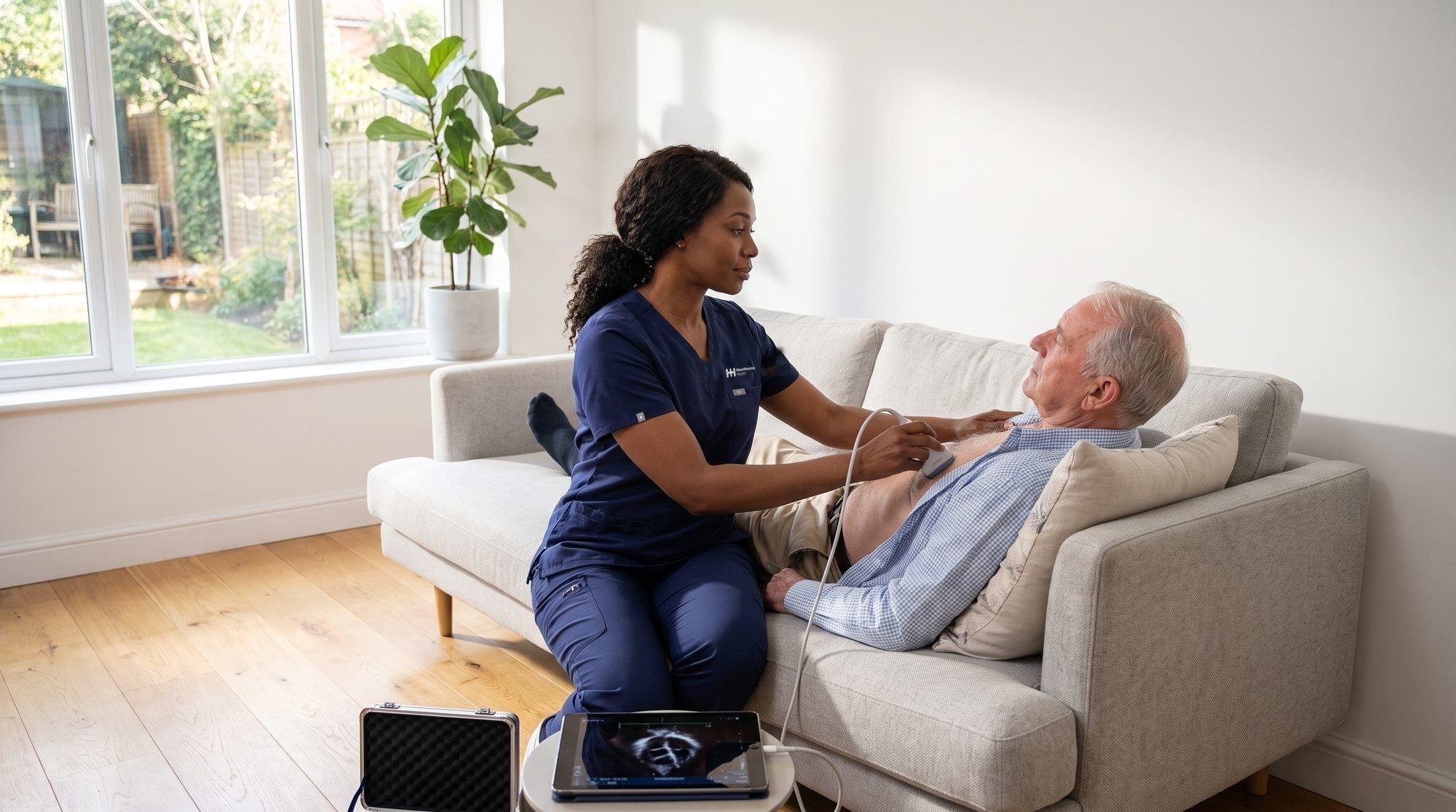
Published research
A 3,000-participant national prevalence study whose echocardiograms were performed in participants’ homes, in all 50 states.
Hawthorne Health supported the Cardiovascular Research Foundation on PREVUE-VALVE. We contacted eligible individuals to obtain informed consent and schedule the study procedures, and our sonographers performed the echocardiograms in participants’ homes, in all 50 states, to the core laboratory’s acquisition protocol.
An independent research organization (Hawthorne Health) then contacted eligible individuals to obtain informed consent and schedule the study procedures.
PREVUE-VALVE, Methods
Earlier prevalence studies drew on people who already had a clinical reason for an echocardiogram, or who were well enough to travel to a medical facility. This one went to the participants instead, and the authors conclude it establishes the feasibility of large-scale decentralized cardiovascular imaging.
The investigators thank Michael Arevelo, Ah’Shirae Arana, and Caroline Callison of Hawthorne Health in the paper’s acknowledgments.
Brener MI, et al. Senior author: Cohen DJ. Population Prevalence of Valvular Heart Disease in the United States: The PREVUE-VALVE Study Journal of the American College of Cardiology. J Am Coll Cardiol. 2026;87(23):3227-3239. doi:10.1016/j.jacc.2026.02.5137 (NCT05357404)
Evidence
Studies we have run, and what they delivered.
Operational figures from our own records, dated and shown with the numbers behind them. Studies are identified by design and phase rather than by sponsor, the same confidentiality we extend to every program we run.
of study visits conducted in window
Protocol-compliant visit windows across the program
screen-to-enrollment rate
101 enrolled of 124 screened
Cardiovascular · Post-approval · In the patient’s home
Intake to report cut from 16 days to 7, in a post-approval REMS imaging program
7 days median from intake to report delivery · 133% of forecast visit volume · 98.9% reported they were very satisfied
Cardiovascular · Observational · In the patient’s home
3,000 in-home echocardiograms, with two uninterpretable
3,000 participants with an analyzable in-home echocardiogram · 99.9% of completed visits produced an interpretable study · 88.4% of consented participants completed the visit
Vaccines · Phase 3 · In person, at our community sites
101 participants in five weeks as a rescue site network
101 participants enrolled · 5 weeks of active enrollment · 14 days from contract signature to first site activated
Cardiovascular · Device · In the patient’s home and at our community sites
96% of visits in window across a below-the-knee cardiovascular program
96% of study visits conducted in window · 99% reported they were very satisfied · 7 days to schedule a visit

Therapeutic depth
Investigators who have run trials in the indication, named on the page, with their own numbers.
Therapeutic expertise
8 therapeutic areas, each with its own investigators and its own numbers.
Not a blended corporate figure. Every area page carries the investigators who have run trials in that indication, the sites that support it, and the reach behind it.
Investigator counts and publications are taken from the curricula vitae on file and are listed in full on each profile. Therapeutic areas
Working with us
One contract, one project manager, whichever way the study is delivered.
A single clinical trial agreement covers the community sites and the at-home visit network together.
Staffing is contracted before a study is awarded, so activation does not wait on availability.
Recruitment runs centrally across pharmacy referral, community outreach and digital channels rather than leaving each site to source its own candidates.
Coordinators sit on site full time, with direct authority over the pharmacy and investigator teams.
Send a protocol and we will come back with fit, coverage and a recommended delivery approach. Or write to studies@hawthornehealth.com.
Where we are
Site pages written for a feasibility manager.
Each location page carries the community around it from Census data, the staffing model, the named investigators, the equipment actually installed, and the nearest airport for monitoring visits. 9 states with an active site today, with expansion underway.
Research locationsHow it is governed
One quality system across every setting.
Aligned SOPs, centralized training and delegation, investigator oversight, and source data quality-reviewed, with in-home visit source data returned to the study site within 24 to 48 hours. You are welcome to audit any of it.
Quality and complianceEvaluate the network for your study
Send us your protocol for a feasibility review.
We will come back with a clear view of fit, coverage, and a recommended delivery approach.